
Best ESG certifications in Australia: which one suits your career?
For most Australian professionals, the smartest path to a credible ESG credential is a nationally recognised vocational qualification, such as a Certificate IV in Environmental Sustainable Management, paired with scheme specific training that matches your role. Which scheme depends on what you do: investment professionals need RIAA certification, building specialists need NABERS or Green Star, and corporate leaders need governance focused training. The sections below map schemes to careers and show a working pathway.

Most Australian ESG certifications are scheme-specific, requiring proof through audits or assessments instead of just completing a course or micro-credential.
Formal qualifications like a Certificate IV combined with scheme-specific training build credible, evidence-based skills necessary for certification and employment.
Recertification for NABERS, Climate Active, and B Corp is ongoing and relies on current evidence, audits, or reassessment at regular intervals.
Industry-recognized certifications like RIAA and NABERS are increasingly essential for credibility in finance, property, and sustainability roles, especially under tightening regulations.
Practical, role-mapped training that incorporates workplace projects is more valuable than generic badges, as regulators and employers seek demonstrable, auditable expertise.
What are the best ESG certifications in Australia?
Australia doesn't run one master ESG certification. Instead, there's a cluster of schemes, each built for a different job and a different kind of proof.
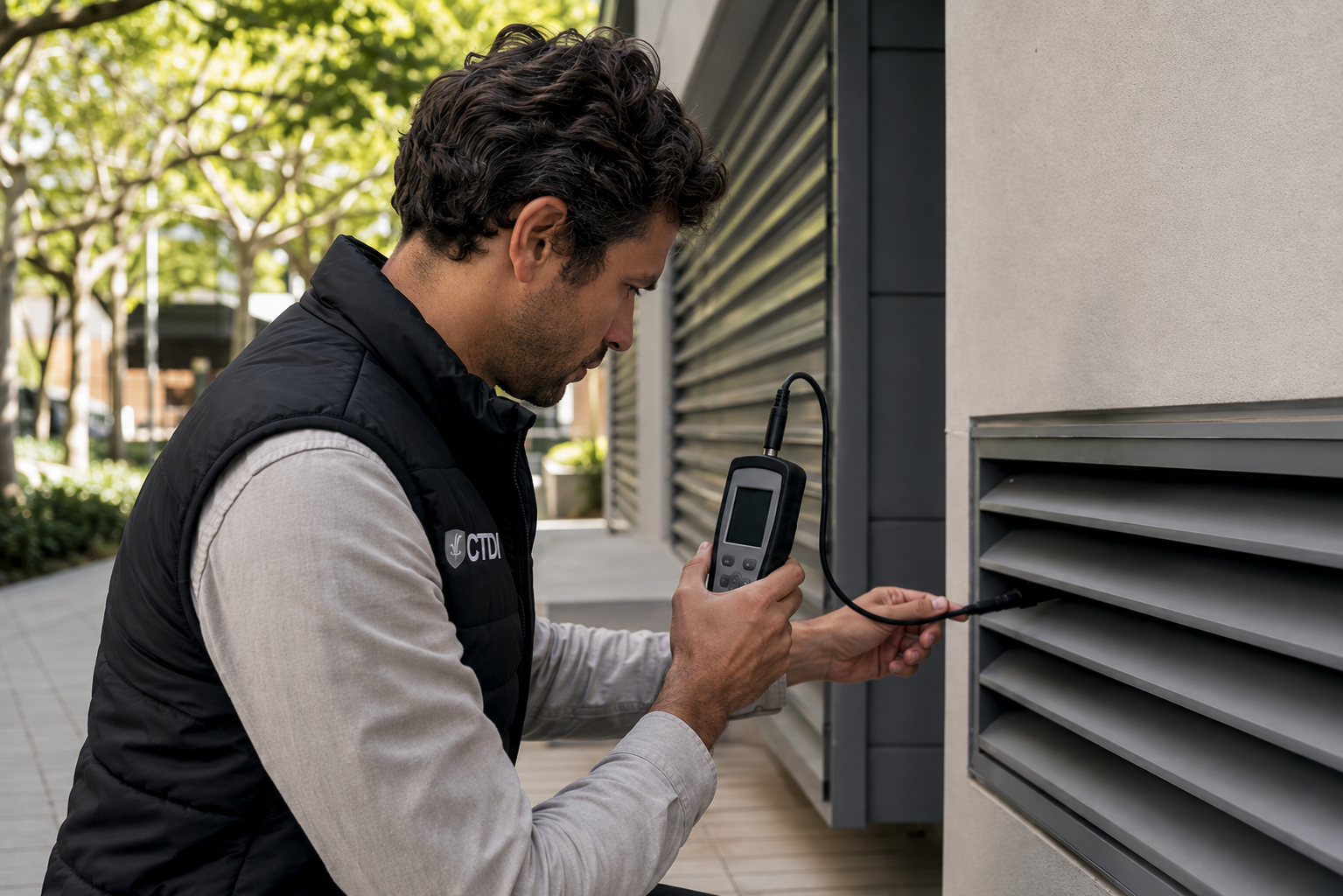
NABERS and Climate Active sit at the building and carbon end of things. NABERS rates the energy, water and waste performance of buildings, and it feeds directly into Climate Active Carbon Neutral Certification, the government-backed scheme for organisations and buildings claiming carbon neutrality. To assess buildings under this pathway, you need specific NABERS assessor training and a supervised first rating before you're signed off to work independently.
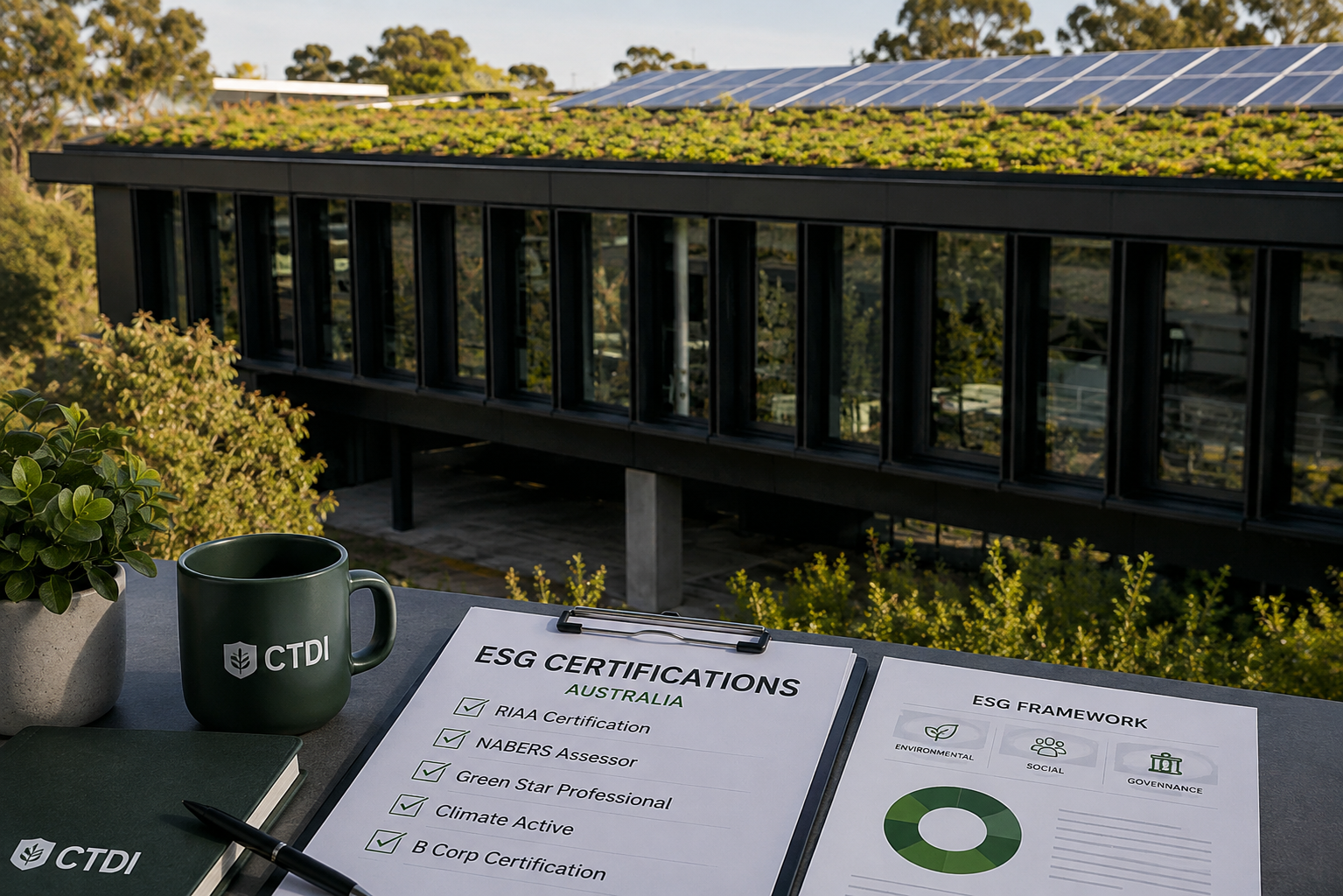
RIAA's Responsible Investment Certification Program operates in the financial services space. It verifies that investment products and advisers actually do what they claim on ESG grounds, using classifications such as Responsible, Sustainable and Sustainable Plus. RIAA's own materials describe the program as increasing transparency for investors trying to separate genuine responsible investment products from marketing dressed up as one.
B Corp certification, assessed through the B Impact Assessment, looks at a whole company rather than a single product or building. In Australia, Certification Oceania is the accredited body handling this, and it holds JAS-ANZ and IAF accreditation, which matters if you need the certification to stand up in a tender process or an investor due diligence check.
Green Star, run by the Green Building Council of Australia, is the long-standing rating tool for sustainable buildings and fit outs. The current version, Green Star Buildings v1.1, has been updated with new credits aligned to climate mitigation, which tells you the standard keeps moving and older certifications can date quickly.
Then there's the training layer sitting underneath all of this. A few distinctions worth holding onto:
Training credentials (micro-credentials, Certificate IV qualifications) build the skills and knowledge base. They don't certify a product, building or company. They certify a person.
Audit and certification schemes (NABERS, Climate Active, B Corp, RIAA) verify an outcome. Most require evidence, an assessor or an audit, not just a completed course.
Several schemes have prerequisites. You generally can't walk into NABERS assessor accreditation without foundational training, and RIAA's certification process expects a fund manager or adviser to already have compliant products and documentation in place.
Industry-specific product schemes, including standards like SSA, cover supply chain claims where a company's product or sourcing needs independent verification rather than a governance overhaul.
Which ESG certification suits your role?
Choosing between these schemes gets a lot easier once you stop asking "which is best" and start asking "what does my job actually need me to prove."
Sustainability managers and ESG leads generally do better starting with nationally recognised vocational training, then layering on a governance-focused micro-credential. The Governance Institute of Australia's ESG course covers governance frameworks, ESG risk and disclosure, content that maps directly onto board reporting obligations.
Built environment and facilities professionals should be looking at NABERS and Green Star training specifically, with an eye on the assessor pathway if ratings work is part of the job description.
Investment professionals and financial advisers need RIAA's Responsible Investment Certification and the CPD that sits around it, since this is the credential clients and compliance teams actually recognise in that sector.
Small business owners and social enterprises are usually better served by the B Corp assessment process itself. It doubles as an improvement program, forcing a genuine look at governance, workers and environmental impact rather than just producing a badge.
Students and early-career professionals get the most mileage out of micro-credentials and a Certificate IV, building employable, demonstrable skills before specialising into any one scheme.
Sustainability managers: Certificate IV plus governance micro-credential
Built environment roles: NABERS or Green Star training, assessor pathway if relevant
Investment and advice roles: RIAA Responsible Investment Certification
Small business and social enterprise: B Corp / B Impact Assessment
Students and career changers: micro-credentials plus Certificate IV
Pro Tip:Don't chase a scheme certification before you've got the underlying skills. Assessors and auditors can tell within minutes whether someone understands the framework or just filled in a form, and a rejected first assessment costs more in fees and time than doing the training properly upfront.
How to choose an ESG certification in Australia: a practical checklist
Before you commit money or months to any course or scheme, run through this in order.
Check who actually recognises it. Nationally recognised training sits on the national register; private certifiers vary hugely in how seriously employers and regulators take them.
Nail down the scope. Are you trying to certify a company's governance, an investment product, a building's carbon performance, or a supply chain? Each scheme is built for one of these, not all of them.
Understand the assessment method. Some are course-based with an exam or assignment. Others, like NABERS or B Corp, need audited evidence, site assessments, or a supervised first rating.
Confirm the career payoff. Ask whether the credential shows up in job ads, tender requirements or finance applications in your industry, not just in course marketing.
Compare time, cost and delivery mode. Online self-paced options suit working professionals; assessor-supervised pathways take longer and cost more but carry more weight for buildings and carbon work.
Watch for red flags. No published assessment criteria, no clear accrediting body, or vague claims about "global recognition" with nothing to back it up are all reasons to look elsewhere.
Australia's ESG rules keep tightening, and legal commentary on the regulatory landscape makes the point that certification is becoming a genuine risk management tool, not just a resume line. That's exactly why the checklist above matters more than picking whichever course shows up first in a search.
A working pathway: Certificate IV plus scheme training
CTDI's Certificate IV in Environmental Sustainable Management is a nationally recognised, industry-designed qualification delivered entirely online and self-paced, built to give students the practical grounding that ESG roles actually require rather than a surface-level overview.
That foundation then pairs with scheme-specific training depending on where you want to work:
Heading into buildings and carbon work? Combine the Certificate IV with NABERS assessor training and expect a supervised first rating before working solo.
Heading into investment or advice? Pair vocational study with RIAA's certification guidance for the specific product classifications your firm handles.
Heading into corporate governance? Layer a governance-focused micro-credential on top for the disclosure and risk frameworks boards expect.
One detail worth flagging early: combining formal study with a real workplace project, a materiality assessment or an emissions inventory, creates the kind of auditable evidence these schemes actually ask for, well before you sit any external assessment.
If you're ready to start building that base, CTDI's course pages and enrolment team can walk you through which combination fits your current role.
How renewal and recertification actually work
None of these credentials are set and forget. NABERS ratings expire and need reassessment on a set cycle, generally annually for the more common rating types, which keeps building performance data current rather than locked to conditions from years earlier. Climate Active certification likewise requires organisations to keep meeting the carbon neutral standard year on year, not just at the point of first certification.
RIAA's Responsible Investment Certification isn't a one-off tick either. Certified products and advisers go through periodic reassessment to confirm they still meet the classification they hold, which matters given how fast product disclosure obligations shift in this sector.
B Corp works on a fixed cycle too. Companies recertify roughly every three years, resubmitting the B Impact Assessment to show they've maintained or improved their score rather than coasting on an old result.
Training credentials sit a little differently. A Certificate IV doesn't expire, but the governance and technical knowledge behind it does age, particularly around disclosure standards and reporting frameworks. Most professionals in ESG-adjacent roles top this up with CPD points or short micro-credentials every year or two, less because a rule demands it and more because the regulatory ground keeps moving underneath them.
What these credentials actually mean for your career
The credentials that carry weight in Australian job ads and tender documents tend to be the ones with a clear accrediting body behind them, not the ones with the flashiest marketing. A NABERS accreditation or RIAA certification on a resume tells an employer something specific and checkable. A vague "sustainability certificate" from an unnamed provider tells them almost nothing.
For sustainability managers and ESG leads, nationally recognised vocational training combined with a governance micro-credential is increasingly treated as a baseline expectation for mid-level roles, not a nice-to-have. Built environment professionals with NABERS or Green Star training have a genuine edge in facilities and property roles, where clients and regulators expect that rating expertise as standard.
Financial advisers and fund managers without RIAA certification are finding it harder to compete for mandates where clients specifically ask for verified responsible investment credentials. And for job seekers earlier in their careers, a completed Certificate IV signals to employers that you understand ESG frameworks in practice, not just in theory, which matters more than most graduates expect when they're up against candidates with only a general business degree.
Regulatory shifts reshaping ESG certification in Australia
Australia's ESG regulatory environment has moved fast, and it's changing what "credible" certification looks like. Legal commentary on the evolving regulatory landscape points to tightening disclosure obligations and growing scrutiny of greenwashing claims, both of which raise the bar for what counts as acceptable evidence behind an ESG statement.
That shift changes the calculation for anyone choosing a certification pathway. A course or scheme that simply looks good on paper isn't enough anymore. Regulators and investors increasingly want documented, auditable evidence behind ESG claims, which is exactly why schemes like NABERS and RIAA lean so heavily on assessed evidence rather than self-declared compliance.
Green Star's move to version 1.1 reflects the same pressure, with new credits built around climate mitigation criteria that weren't part of earlier iterations. Schemes that don't keep updating their standards risk losing relevance as the regulatory bar keeps rising.
For anyone picking a certification pathway now, this is the practical takeaway: choose schemes and training providers that are actively updating their standards, not ones that have stayed static for years while the regulatory environment around them has moved substantially.
Why practical, job-mapped training beats a generic ESG badge
Most ESG certification advice treats every scheme as interchangeable, as if collecting badges is the goal. It isn't. The organisations and hiring managers evaluating this work want to see evidence you can produce the specific artefact your role demands, whether that's an audited emissions inventory or a certified investment product disclosure.
Vocational training that maps directly to a job function reduces the risk of failing an external audit, because you've built the underlying skill rather than memorised a framework. Pairing study with a genuine workplace project, even a small one, turns theoretical knowledge into the kind of evidence assessors actually want to see.
If you're weighing up where to start, treat your current or target role as the filter, not the scheme's reputation alone.
— Sam
Start your ESG pathway with CTDI's Certificate IV
CTDI gives you a nationally recognised, industry-designed qualification without the classroom timetable, structured, self-paced and online, so you build ESG skills around your existing job rather than putting your income on hold to study.

The Certificate IV in Environmental Sustainable Management suits sustainability managers, built environment professionals, students and career changers alike, giving you the practical foundation that scheme-specific training, whether that's NABERS, RIAA or governance micro-credentials, builds on top of. Graduates walk away with career-ready skills and evidence you can point to in interviews and tenders, not just a certificate for the drawer. Once you're ready to combine study with a real workplace project, tools like sustainability reporting platforms can help you turn that project into the auditable evidence certifying bodies expect.
If you're ready to get moving, head to CTDI's enrolment page to check intake dates and start your application today.